The Antarctic krill new predators

A Chinese fishing boat sinks in Antarctica

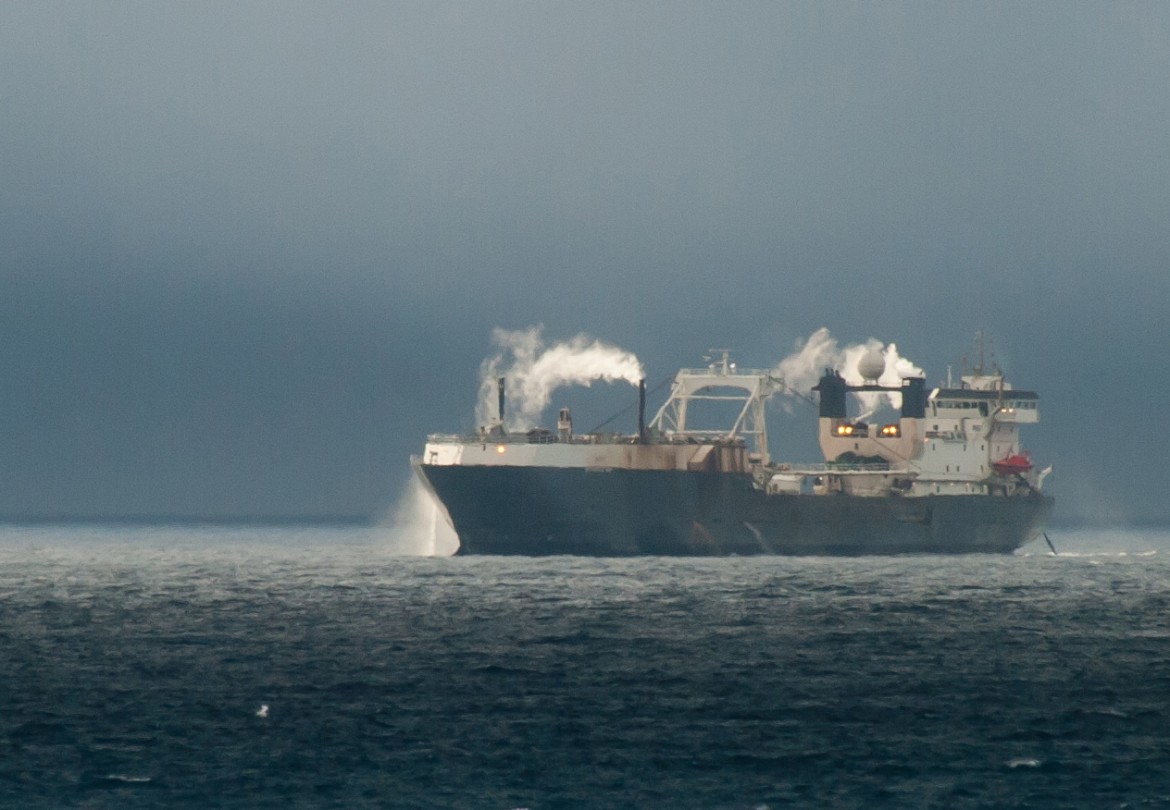
On the 21st of April 2013, the Kai Xin, a 104m Chinese fishing boat, ablaze for four days, sank along the Antarctic coast. Blink and you would have missed this news snippet!

The Chinese krill fishing boat the Kai Xin that sunk along the coast of Antarctica © Chilean Air Force

A Norwegian fishing boat rescued the 97 crewmembers and the Chilean authorities told the media that there was no fuel leak and that the situation was under control. No environmental disaster: no international media headlines.


But the obvious question was not asked…


What was a 100m fishing boat with almost a 100 crew doing in this part of the Antarctic Ocean?


The Kai Xin was one of thirteen 100m-factory ships that hail from Chilli, China, South Korea, Norway, Poland and the Ukraine – all attracted by the same high value commodity: the Antarctic krill.
Other files

  • Investigation on mythical Ithaca

    Culture6 chapters

    Where was located Ithaca, Odysseus’ legendary island ? The epic story written by Homer is one of the basis for modern Western culture. Unbelievably, the island was never to be found. If modern Ithaca seems to be the best option to locate Odysseus’ palace, some have entirely different theories. The crew of OCEAN71 Magazine led a sailing expedition in order to investigate one of the greatest mysteries in history. An enigma that has puzzled historians for more than 2000 years.

  • The American Samoa enigma

    Ecology4 chapters

    It is now a known fact that corals are threatened by global warming. Some scientists are even predicting the end of coral life by 2050. Meanwhile, there is still a mystery to solve : how some corals in American Samoa have resisted centuries of climate change to become giants and how others are thriving in waters so warm that it is considered deadly ?

  • The Sargasso Conquest

    Ecology5 chapters

    What on earth is this strange sea, that doesn’t have a shoreline, and has intrigued most navigators that have sailed through its waters? Christopher Columbus was the first to cross it on his way to America. The Sargasso Sea, that stretches in the North Atlantic, is a calm, windless and waveless zone, often hard to get through. Its name comes from the floating seaweed that covers the water like a carpet. OCEAN71 takes you on a journey to discover this strange surface that has been puzzling many people through the centuries.